
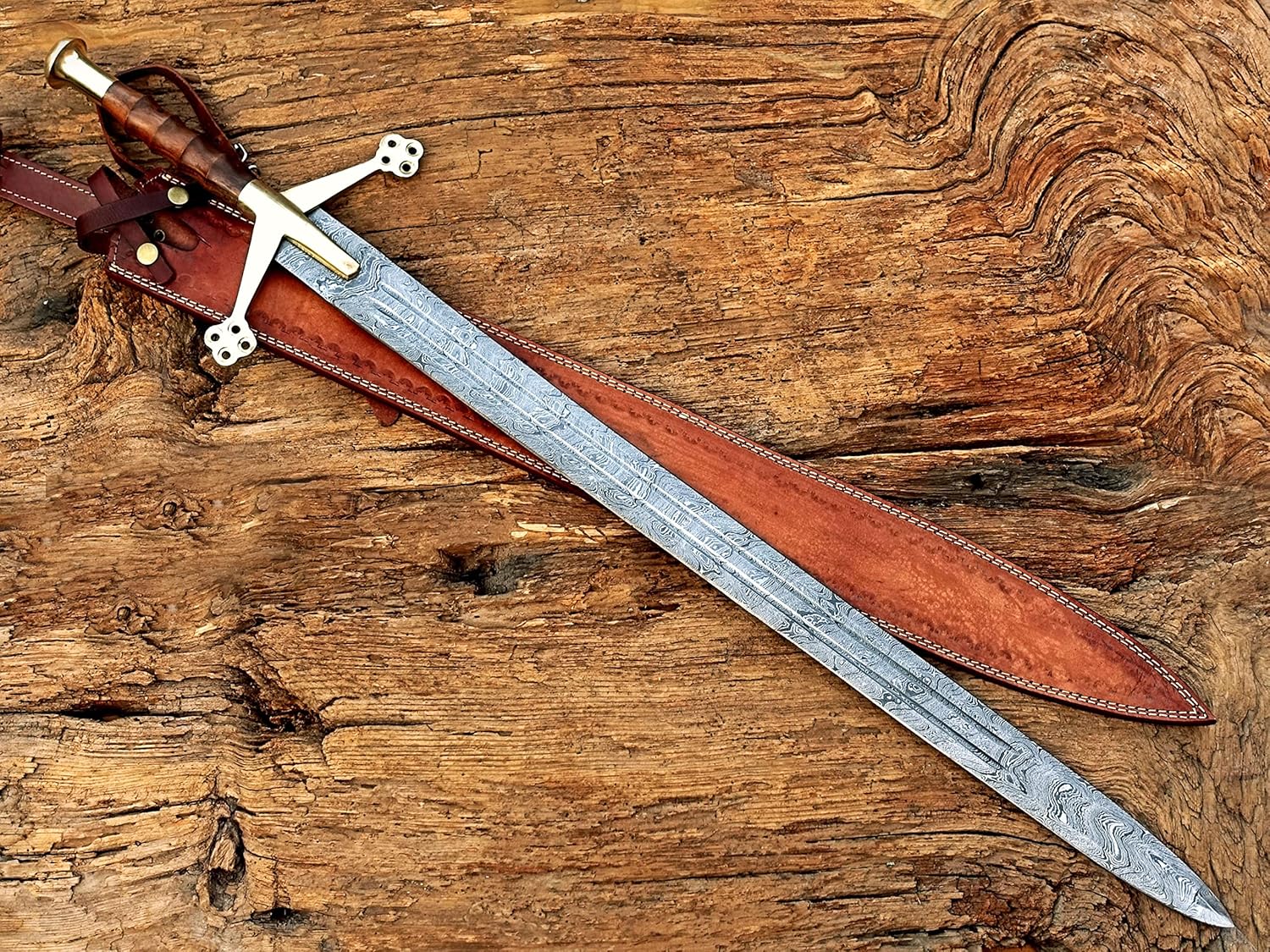
40" Inches Damascus Steel Claymore Sword/Highlands Scottish Sword with Leather Sheath
Product details
| Management number | 216584378 | Release Date | 2026/04/19 | List Price | $56.00 | Model Number | 216584378 | ||
|---|---|---|---|---|---|---|---|---|---|
| Category | |||||||||
Size & measurements: Overall length: 38 inches Handle length: 9 inches Blade length: 28 inches Blade thickness: 4mm Blade hardness: 58-60 HRC Material: Handle material: Rose Wood Guard & pommel: Brass Casted Blade material: Damascus steel Blade edge: razor sharp Scabbard: leather sheath1. Origin and History: Ancient Craft: Named after the city of Damascus in Syria, this steel dates back to around 300-500 AD and was used primarily for making blades and armor in the Middle East. Early Techniques: The original Damascus steel was used by blacksmiths in the Middle East and South Asia. It was famous for its strength and ability to be honed to a sharp edge. 2. Composition: Layered Structure: Traditional Damascus steel was made from ingots of wootz steel, which contains a high carbon content. The steel was forged and folded to create layers, resulting in a characteristic patterned surface. Modern Variations: Contemporary Damascus steel is often made by folding two or more different types of steel or iron. This creates a pattern of alternating layers of steel with different properties. 3. Appearance: Distinctive Patterns: The most recognizable feature is its beautiful, wavy patterns, which resemble flowing water or other natural designs. These patterns are a result of the layered forging process. Texture: The surface may have a unique texture, with visible lines or patterns that are not only decorative but also indicative of the blade’s craftsmanship. 4. Properties: Strength and Durability: The layering process imparts high tensile strength and toughness, making Damascus steel blades resistant to breaking or chipping. Edge Retention: Damascus steel can hold a sharp edge effectively, making it ideal for cutting. Flexibility: The layered construction provides a good balance between hardness and flexibility, preventing the blade from becoming too brittle. 5. Manufacturing Process: Forge Welding: Steel billets or bars are heated to a high temperature and hammered or pressed together. This process is repeated multiple times, with folding and welding, to create many layers. Pattern Development: After forging, the blade is etched with acid or other chemicals to reveal the patterns. This step highlights the layered structure and ensures the final appearance. 6. Applications: Historical Uses: Historically used for making swords, knives, and armor, valued for its strength and sharpness. Modern Uses: Today, it’s used in high-end knives, custom swords, and decorative pieces. It's also popular among collectors for its aesthetic and historical value. 7. Maintenance: Corrosion Prevention: Modern Damascus steel is susceptible to rust if not properly maintained. Regular oiling and cleaning are necessary to prevent corrosion and maintain the blade’s appearance. Sharpening: Requires careful sharpening to maintain its edge without damaging the pattern.
- 1. This sword is made out of Damascus steel. Damascus blades is well crafted using layers melting and hammering.
- 2. The blade is heat-treated, tempered, and oil quenched to achieve optimal levels of flexibility and hardness and sharp edge appropriate for cutting
- 3. Premier quality razor sharp edge blade ensured, ideal grip, excellence finishes, hard cutting edge to sustain after rigorous and long usage.
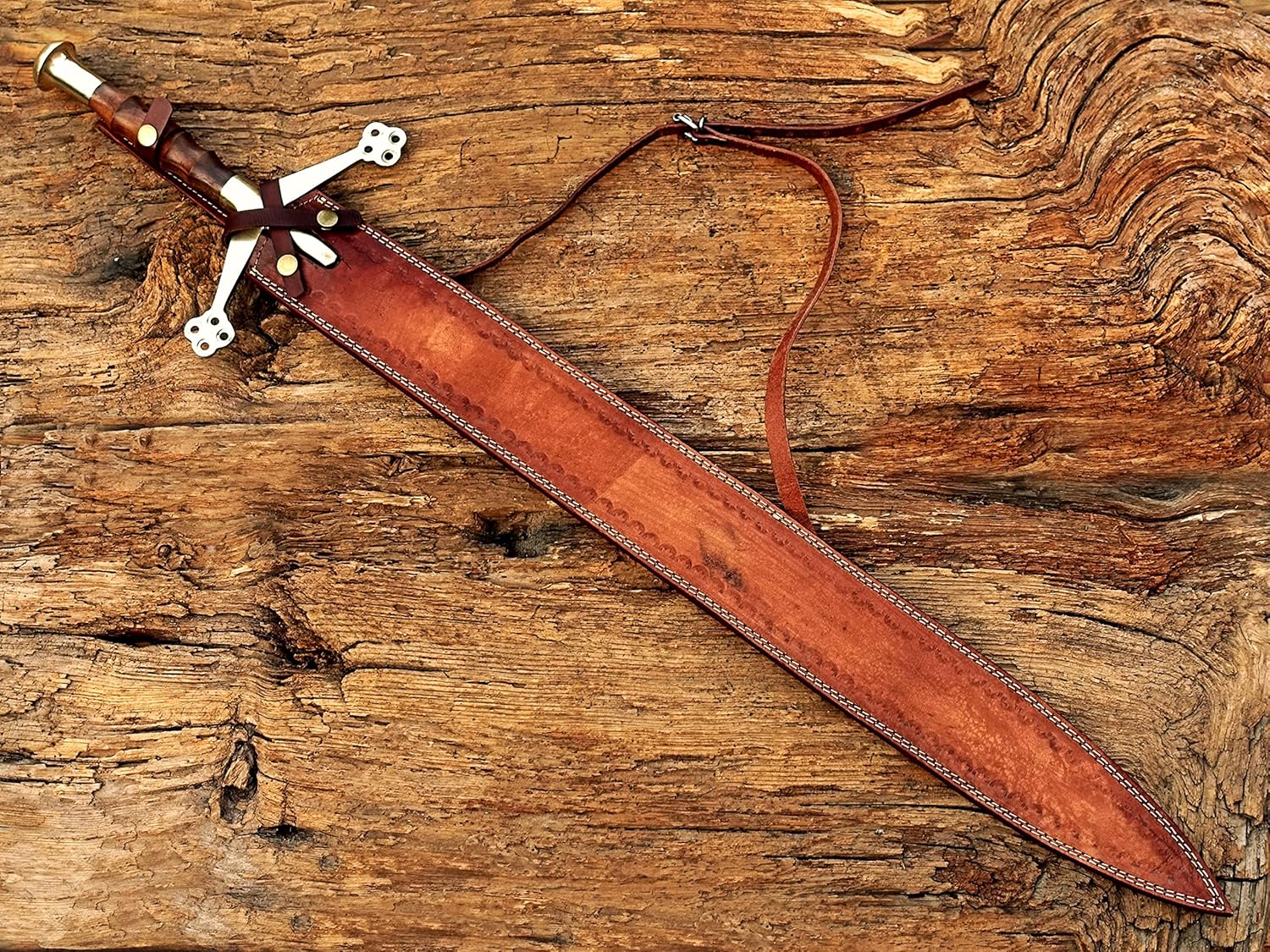
- 4. The sword will comes with a pure leather sheath. The sheath will be made to match the grip of the sword.
- 5. All of our items are handcrafted, forging, material selection, quenching, polishing and grinding.
- 6. Multipurpose cutlery for collectors, hunters, campers, for special occasions gift for anniversary, Christmas, weddings, birthdays,
- 7. Please contact us if you have any questions. e will assist you as soon as possible.
| Brand Name | Generic |
|---|---|
| Blade Length | 28 Inches |
| Manufacturer | generic |
| Product Style | Traditional |
| Handle Material | Rosewood |
| Hand Orientation | Ambidextrous |
| Blade Material Type | Alloy Steel |
| Included Components | Leather Sheath |
| Item Dimensions L x W | 40"L x 10"W |




Bestseller ranking
One Pieces


Customers who viewed this product also viewed
Swords



Correction of product information
If you notice any omissions or errors in the product information on this page, please use the correction request form below.
Correction Request Form